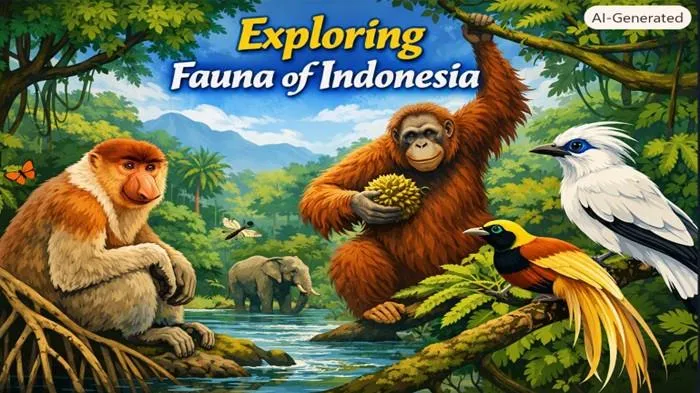
SRIPOKU.COM - Memasuki awal Semester 1 Kurikulum Merdeka tahun ajaran 2026/2027, peserta didik kelas 9 SMP/MTs mempelajari materi Bahasa Inggris pada Chapter 1 Exploring Fauna of Indonesia.
Pada bab ini, siswa diajak untuk mengenal dan mendeskripsikan satwa khas Indonesia secara ilmiah melalui penyusunan serta pemahaman jenis teks laporan hasil observasi (Report Text).
Berikut adalah Ringkasan Materi Utama Chapter 1 beserta 5 Latihan Soal HOTS (Pilihan Ganda & Essay) lengkap dengan kunci jawaban sebagai bahan belajar mandiri siswa maupun acuan bagi guru.
Baca juga: Ringkasan Materi dan Soal HOTS Bahasa Inggris Kelas 8 SMP Chapter 1 Celebrating Independence Day
1. Unit 1. Bekantan
Fokus: Mempelajari ciri-ciri fisik, habitat, makanan, dan perilaku primata endemik Kalimantan (Bekantan) melalui Report Text.
Ciri Khas Teks Report: Menggunakan fakta ilmiah, kosa kata sains (scientific vocabulary seperti endemic, reddish-brown fur, mangrove forest), serta pola kalimat Simple Present Tense karena menyatakan fakta umum.
2. Unit 2. Orangutan and Gorilla
Fokus: Mengomparasi atau membandingkan karakteristik, persamaan, dan perbedaan antara dua jenis primata (Orangutan asal Indonesia dan Gorila asal Afrika) dalam teks laporan/deskriptif.
Tata Bahasa (Grammar): Penggunaan Comparative Words / Phrases (seperti larger than, different from, both of them, unlike gorillas) untuk menunjukkan perbedaan perilaku, habitat, dan struktur fisik.
3. Unit 3. Indonesian Birds
Fokus: Mengenal beragam jenis burung khas Indonesia (seperti Cenderawasih dan Jalak Bali) serta mempelajari cara menyusun teks report sederhana tentang konservasi burung terancam punah (endangered birds).
Struktur Teks Report (Generic Structure):
General Classification: Pernyataan umum yang mengidentifikasi objek (misal: pengenalan spesies burung dan nama ilmiahnya).
Description: Penjabaran detail meliputi physical appearance (penampilan fisik), habitat (tempat tinggal), diet (makanan), dan behavior/threats (perilaku serta ancaman kepunahan).
Read the text below to answer questions 1–3!
The Endangered Bekantan
Bekantan (Nasalis larvatus) is a type of monkey found exclusively on the island of Borneo. It is easily recognized by its long, large nose, especially in males, and its reddish-brown fur. Bekantans live primarily in mangrove forests and areas near rivers.
Unlike many other monkeys, Bekantans are excellent swimmers. They often jump from tree branches directly into the river to cross to the other side or escape from predators. Their diet consists mostly of young leaves, seeds, and unripe fruits. Eating ripe fruits can cause severe bloating due to the unique bacteria in their complex stomachs.
Unfortunately, Bekantans are now classified as endangered animals. The main threat to their survival is habitat destruction caused by palm oil plantations, forest fires, and human settlement expansions. If deforestation continues, Bekantans may face extinction in the near future.
1. Based on the text, why are Bekantans unable to consume ripe fruits like most other primates do?
A. Ripe fruits contain toxic chemicals that can poison their liver immediately.
B. Ripe fruits are too hard for Bekantans to chew with their small teeth.
C. The sugar in ripe fruits reacts with the unique bacteria in their stomach, causing dangerous bloating.
D. Ripe fruits grow on tall trees that Bekantans cannot reach by swimming.
2. If a local government wants to create an effective conservation policy to save Bekantans from extinction, which action directly addresses the primary threat mentioned in the text?
A. Building large artificial swimming pools for Bekantans in urban areas.
B. Strictly protecting mangrove forests and halting illegal land clearing in Borneo.
C. Feeding Bekantans with ripe fruits to accelerate their growth rate.
D. Moving all Bekantans from Borneo to forests in other continents.
3. Read this comparison sentence:
"Orangutans spend most of their time up in the trees, whereas Gorillas are primarily ground-dwelling primates."
What can we infer about the physical adaptability of both animals based on that sentence?
A. Gorillas have longer arms adapted for swinging between tree branches.
B. Orangutans have stronger feet adapted for running fast on land.
C. Orangutans possess physical traits suitable for arboreal (tree-living) life, while Gorillas are adapted for terrestrial life.
D. Both Orangutans and Gorillas share the exact same physical traits for living in high-altitude mountains.
Answer the following questions based on your critical thinking!
4. (Soal HOTS Essay - Menyusun Teks Report Berdasarkan Data)
Analyze the factual scientific notes below about the Bali Myna (Jalak Bali):
Question: Write a short General Classification paragraph (2–3 sentences) for a Report Text based on those facts, using correct Simple Present Tense!
5. Compare the communicative purpose and verb tenses used in a Report Text about Bekantans versus a Personal Recount Text about A Student’s Visit to Kutai National Park. Explain why their verb tenses are different!
(1) C. The sugar in ripe fruits reacts with the unique bacteria in their stomach, causing dangerous bloating. (Analisis: Paragraf ke-2 menjelaskan bahwa mengonsumsi buah matang menyebabkan kembung parah/bloating karena bakteri unik pada sistem pencernaan Bekantan).
(2) B. Strictly protecting mangrove forests and halting illegal land clearing in Borneo. (Analisis: Paragraf ke-3 menyebutkan ancaman utama Bekantan adalah habitat destruction akibat alih fungsi lahan/deforestasi, sehingga solusinya adalah perlindungan hutan mangrove).
(3) C. Orangutans possess physical traits suitable for arboreal (tree-living) life, while Gorillas are adapted for terrestrial life. (Analisis: Kata "whereas" menunjukkan kontras/perbandingan sifat; Orangutan hidup di atas pohon/arboreal, sedangkan Gorila hidup di atas tanah/terrestrial).
(4) Contoh Jawaban Paragraf General Classification:
"The Bali Myna (Leucopsar rothschildi), locally known as Jalak Bali, is an endemic bird species native to the island of Bali, Indonesia. This bird is famous for its striking pure white plumage, distinct blue skin around its eyes, and black-tipped wings. Due to severe illegal poaching and habitat loss, the Bali Myna is currently classified as a critically endangered species."
(5) Analisis Perbedaan Teks: