World War II Memorial Vandalized With Graffiti and Bubbles, Angering Trump/ TezzBuzz/ WASHINGTON/ J. Mansour/ The World War II Memorial in Washington was vandalized with red graffiti while bubbles filled one of its fountains. Trump called the damage an insult to American war heroes, and U.S. Park Police opened an investigation. The incident follows Trump’s unsupported vandalism claims about the nearby Reflecting Pool, where prosecutors blamed defective work instead.
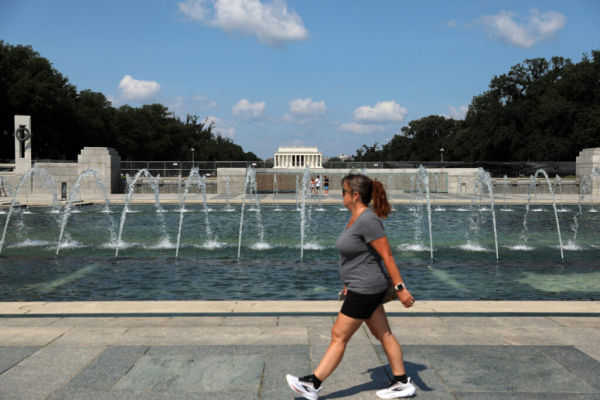
Vandals poured bubble soap and painted graffiti on the World War II Memorial in Washington, D.C., Thursday.
The World War II Memorial on Washington’s National Mall was vandalized Thursday, with bubbles filling a fountain and red graffiti painted at the site.
The message “Clean hands dirty $” was written in red paint.
The memorial honors the 16 million Americans who served in the armed forces during World War II, those who supported the war effort at home and more than 400,000 Americans who died during the conflict.
The damage drew condemnation from President Donald Trump, federal officials and veterans organizations.
Trump reacted Friday in a post on Truth Social.
The president did not identify any suspects or provide information about who might have carried out the vandalism.
He connected the incident to earlier controversy surrounding the Lincoln Memorial Reflecting Pool, another National Mall landmark located nearby.
The Interior Department said U.S. Park Police officers responded following the vandalism.
An investigation was ongoing.
Officials did not immediately release information about surveillance footage, possible suspects or the cost of removing the graffiti and cleaning the fountain.
National Park Service manages both the World War II Memorial and other major monuments on the National Mall.
The Friends of the National World War II Memoriala nonprofit that assists with maintaining and supporting the site, condemned its use for political or personal expression.
The organization emphasized the memorial’s significance to veterans, military families and visitors commemorating those who served during the war.
The Veterans of Foreign Wars also criticized the vandalism.
The organization called it “an act of profound disrespect, a slap in the face to the veterans who served and sacrificed and to the families who carried that burden at home.”
The VFW represents veterans who served in foreign conflicts and regularly advocates for the protection of military memorials.
Its statement framed the damage as an offense not only against the physical site but also against the people and sacrifices it commemorates.
The World War II Memorial sits immediately east of the Lincoln Memorial Reflecting Pool.
Earlier this year, a defective renovation left the pool with peeling blue sealant and green algae.
Trump repeatedly blamed vandals for the problems, despite providing no evidence that intentional damage caused the failures.
The verified graffiti at the World War II Memorial gave Trump another opportunity to connect vandalism with his broader efforts to renovate and protect Washington landmarks.
Federal prosecutors charged former Olympian David Hearn in late July with deliberately damaging the Reflecting Pool.
The case followed Trump’s public insistence that vandals had cut or otherwise harmed the pool’s new lining.
The Justice Department initially presented the prosecution as an accountability measure involving damage to an important national landmark and one of Trump’s favored renovation projects.
The allegations later unraveled after prosecutors received evidence contradicting the vandalism theory.
The Justice Department moved to dismiss the case after evidence indicated that poor construction, rather than vandalism, caused the damage.
Prosecutors concluded that problems with the installation of the blue lining made it difficult to prove that Hearn or other alleged vandals were responsible.
The dismissal embarrassed a Justice Department that had previously echoed Trump’s claims.
It also undermined the president’s repeated assertion that intentional destruction explained the pool’s peeling material and other defects.
U.S. Attorney Jeanine Pirro concluded that the Reflecting Pool problems resulted from defective construction rather than vandalism.
Trump sharply criticized that assessment and urged her to reconsider the case.
Pirro’s decision was notable because political appointees and administration officials have rarely contradicted Trump publicly during his second term.
Her move to dismiss the prosecution therefore became both a legal setback and an unusual instance of open disagreement within the administration.
That explanation represented a substantial change from her position when she announced the indictment.
At that time, Pirro said prosecutors possessed “tremendous evidence” supporting the vandalism charge.
The later dismissal raised questions about how thoroughly investigators evaluated the pool’s construction problems before bringing the criminal case.
Interior Secretary Doug Burgum appeared to reject Pirro’s criticism in a post on X.
He said some acts of vandalism had been captured on video.
Burgum did not publicly resolve the distinction between activity recorded near the pool and the construction defects prosecutors concluded had caused the damage central to the case.
The disagreement left Trump administration officials offering competing accounts of what occurred.
Unlike the Reflecting Pool controversy, the World War II Memorial incident included visible graffiti and bubbles placed in a fountain.
The written message provides direct evidence that at least part of the disruption was intentional.
Investigators must now determine who entered the memorial, applied the red paint and introduced the substance that produced the bubbles.
Officials have not said whether the acts were connected, whether more than one person was involved or what the message was intended to mean.
The Park Police investigation will also determine whether criminal charges are warranted.
More on US News