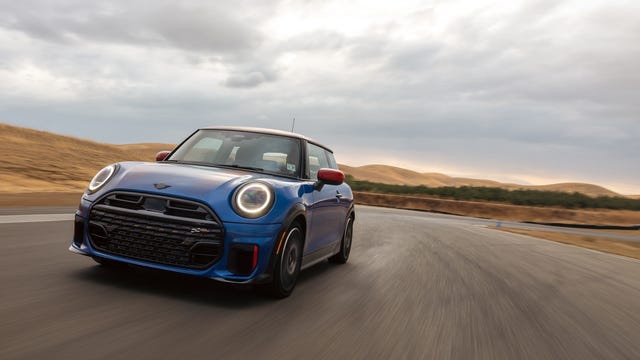
A new-generation Mini Cooper is said to be under development, and a fresh report from Britain’s Autocar suggests the compact hatchback could shift to a rear-wheel-drive platform.
The iconic Mini hatchback has used front-wheel drive since it first arrived more than 60 years ago, but BMW’s ownership of the British marque could soon bring a change. Following a discussion with BMW development chief Joachim Post, Autocar reports that the German carmaker’s Gen6 platform— a rear-wheel-drive-biased architecture already being used for the BMW iX3 and i3—may form the base for the next electric Cooper hatchback. On top of that, BMW Group engineers reportedly told the UK publication that there are currently no plans to create a front-wheel-drive unit for the Gen6 platform.
“We will see what the future is,” Post told Autocar. The BMW executive further said that drivetrain choices for future Mini models would be “the optimum for the package”, and that “sheer driving pleasure” will be the target for upcoming cars from the brand.
Current-generation electric Mini Cooper models are built in partnership with Great Wall Motor in China, which is why Mini has avoided offering electrified Cooper versions in the US market because of tariff restrictions. Even so, the electric Mini Countryman SE, which is manufactured in Leipzig, Germany, is sold in the US.
If Mini chooses to move the electric Cooper onto the Gen6 platform, the petrol-powered Cooper would probably remain front-wheel drive, according to the report. The current internal-combustion Cooper is expected to stay on sale through 2030, and hybrid-electric powertrains could also be introduced later. Regardless of the powertrain split, the Cooper and Cooper Electric will continue to follow a shared design philosophy, according to Mini design head Holger Hampf.
“We have started to work on the next generation of Mini,” Hampf confirmed to Autocar. “You can ask a Brit or a German or an Italian, you can ask a five-year-old, and they will recognise a Mini based on the proportions of the car.”
Mini’s design chief said the three-door hatch remains a defining element of the brand, and he intends to preserve its chunky stance, short overhangs and friendly face. Hampf said round headlamps and a smiling grille are the most important visual identifiers for a Mini, adding that the Cooper’s compact proportions are “non-negotiable” and that future models will look back to the earliest BMW-era Minis from the early 2000s.
“Many people out there don't actually have a recollection of the classic Mini, but they do have a recollection of one of the Minis we have done in BMW's ownership in the past 25 years. I will make sure to connect to this past,” Hampf told Autocar. “And this isn't to say that we will become vintage, not at all. It's an interpretation in the modern way of what we've done: a clever use of space or some smile-creating surprises in the car.”
As ever, though, these claims should be treated as speculation until the company confirms anything officially. When asked to comment on the latest report, a Mini spokesperson issued the following statement: “We don’t comment on future product decisions or otherwise acknowledge speculation—however wild, attention-seeking, or dramatic it may be.”