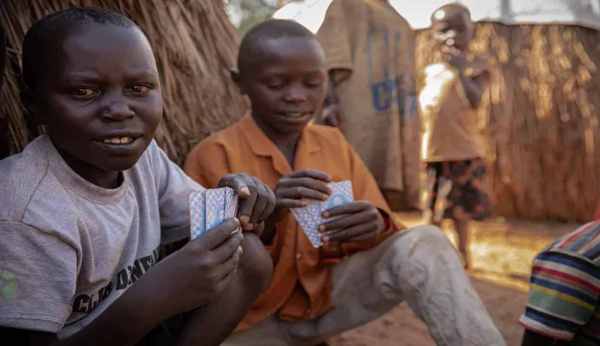
UN: According to a UN spokeswoman, the UN Office for the Coordination of Humanitarian Affairs (OCHA) is raising the alarm about an increase in violence in the eastern Democratic Republic of the Congo (DRC) province of Ituri, which is seriously impeding life-saving efforts in the area.
At a daily briefing on Tuesday, Stephane Dujarric, the UN secretary-general’s spokesperson, stated that at least 25 civilians have been killed and over 40 injured in the past month in the town of Bule and surrounding areas, where fighting has been going on since early December.
More than 87,000 displaced people currently residing in and around Bule have effectively lost access to aid due to the insecurity, according to OCHA, and these families are severely lacking in clean water, food, and medical care, according to Dujarric.
He stated that no humanitarian organization has been allowed to work in the impacted regions for more than a month because of the unstable security situation.He added that safe, predictable, and unhindered humanitarian access is crucial to providing life-saving aid and preventing a further worsening of the situation. “The UN reminds all parties to the conflict of their obligations under international humanitarian law to protect civilians and to ensure the safety of humanitarian workers wherever they need to be,” the Xinhua news agency reported.
The DRC’s government had earlier on January 1 reported that since early December 2025, the violence in the country’s eastern region of South Kivu has escalated, killing nearly 1,500 people.
According to a government statement, violence has escalated in a number of the province’s districts, especially along the Kamanyola-Uvira axis, where armed activities have caused widespread displacement. In the meanwhile, ongoing instability had pushed almost 500,000 people to leave their homes.
According to the administration, the front lines have progressively moved southward, impacting many South Kivu regions, including Uvira, Fizi, and Mwenga.
Armed organizations operating in the area were blamed by the government for the escalation, and they were accused of breaking both international humanitarian law and existing agreements.
The administration had reaffirmed its commitment to reestablish state power throughout the country and to pursue legal and diplomatic means to prosecute those accountable.
After the March 23 Movement rebel organization resurfaced in late 2021, the decades-long unrest in the eastern Democratic Republic of Congo has become worse. Kigali has refuted Kinshasa’s repeated accusations that Rwanda, a neighboring country, is supporting the gang.