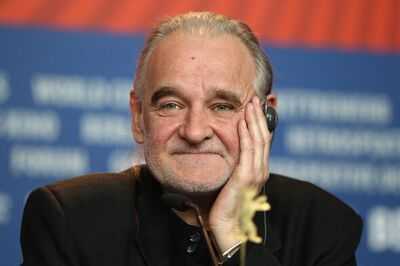
Hungarian art house director Béla Tarr, known for his long, elaborately choreographed takes, languid pacing, and stark black-and-white visuals, has died at the age of 70. Hungarian filmmaker Benxe Fliegauf confirmed the tragic news to Hungary's national news agency MTI, on behalf of the Tarr family. Posting on their website on Tuesday (January 6), the European Film Academy revealed Tarr died "after a long and serious illness" in a memorial post.
In his coveted career, Tarr directed nine feature films during the course of a relatively short career. This included films such as Family Nest in 1979 and his final film, The Turin Horse in 2011.
In his films, he perfected his radical formal style, which prioritises the direct experience of time, space, and atmosphere over conventional narrative storytelling. Many of his movies feature long, complex single-take shots that often last several minutes, allowing the audience to experience the physical space better, which some critics termed "temporal realism".
Opting to avoid traditional plot points, they explore existential themes of human existence, focusing on the lives of the marginalised and desperate, who usually live in bleak or dystopian post-communist Hungarian landscapes.
Despite failing to achieve commercial success, his films had a profound impact on art house cinema. His 1994 feature film, Sátántangó, a 450-minute adaptation of László Krasznahorkai's novel, is considered one of the founding films of the contemporary slow cinema movement.
Throughout his career, Van Sant has cited Tarr as a major influence on his Death Trilogy, comprising Gerry, Elephant, and Last Days, which featured Tarr-like pacing and camerawork. The cinema of Jarmusch, with its detached observation and contemplative pace, also shares much of Tarr's cinematic DNA.
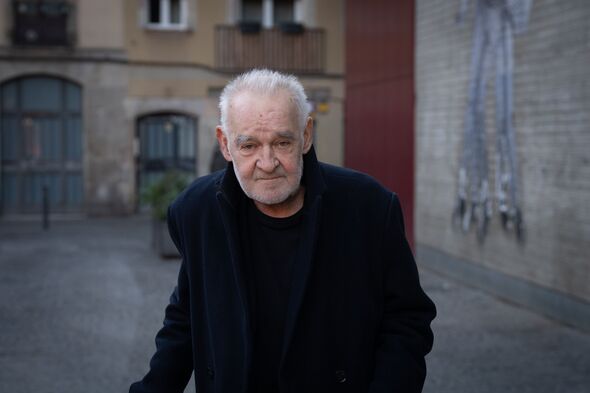
Born in the heart of Pécs, Hungary, in 1955, Tarr began his career at the age of 16. He started his career at Balázs Béla Stúdió, a seminal studio for Hungarian experimental cinema. His directorial debut, Family Nest, won the Grand Prix at the Mannheim Film Festival, after which he enrolled in the Academy of Theatre and Film in Budapest.
After graduating in 1982, Tarr established his own studio, Társulás Filmstúdió, which operated until it was shut down due to political reasons in 1985. His second feature, Damnation, was made independently and premiered at the Berlin Film Festival, where it was nominated for best young film at the 1988 European Film Awards.
Tarr was very politically outspoken and often considered himself a "leftist anarchist". He was a consistent critic of nationalism and right-wing populism, publicly condemning the likes of Hungarian leader Viktor Orbán, French populist Marine Le Pen, and Donald Trump.
In 2023, he joined dozens of fellow filmmakers when he signed an open letter calling for a ceasefire in Gaza, the protection of civilians, humanitarian access, and the release of hostages. After finishing The Turin Horse, which premiered at the Berlin Film Festival and won the Grand Jury Prize, Tarr declared his oeuvre complete.
He told The Hollywood Reporter at the time: "I don't want to be a stupid filmmaker who is just repeating himself and doing the same s**t just to bore the people." He dedicated the rest of his career to developing new ways of filmmaking through educational programs.
He founded the international film school, Film Factory, in Sarajevo in 2012, recruiting Van Sant and such other art house luminaries as Apichatpong Weerasethakul, Carlos Reygadas, Tilda Swinton, and Juliette Binoche to work as teachers in an unconventional, open study format.
He also served as a visiting professor at international film academies and conducted workshops and masterclasses for young filmmakers worldwide. He was honoured by the European Film Academy in 2023 for his contributions to cinema.