Gaza : peace initiative has entered a new phase, drawing cautious optimism at the United Nations as India publicly acknowledged the role played by the United States in advancing efforts to end the prolonged conflict. The remarks came during a Security Council debate focused on the wider situation in the Middle East, where diplomats reviewed recent developments linked to the fragile ceasefire in Gaza.
Addressing the Council, India’s Permanent Representative underscored New Delhi’s long-standing position against terrorism, stressing that violent extremism cannot be justified under any circumstances. While refraining from naming specific groups, the envoy made clear that attacks targeting civilians have no place in modern societies and must be condemned universally, without exceptions or qualifiers.
India also referenced progress made under a Security Council resolution adopted in November, which laid the groundwork for de-escalation in Gaza. The Indian representative used the occasion to formally acknowledge the United States for its diplomatic engagement on what he described as a complex and long-running issue. The statement stopped short of mentioning US President Donald Trump, despite his public claims of personal involvement in securing the ceasefire.
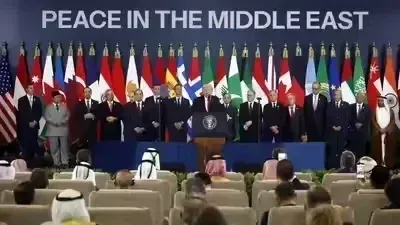
With the ceasefire largely holding, Washington has announced the launch of the second phase of a 20-point peace framework. According to US officials, this stage is intended to establish a transitional technocratic Palestinian administration, initiate the complete demilitarisation of Hamas and other armed factions, and begin large-scale reconstruction across Gaza. The plan is being presented as a pathway toward stabilisation and long-term recovery.
India highlighted the immense task that lies ahead in rebuilding Gaza’s infrastructure and restoring essential public services. Citing estimates from the UN Office for Project Services, the Indian envoy noted that approximately 60 million tonnes of rubble remain scattered across the territory. He warned that clearing debris contaminated with hazardous materials would require advanced technology, careful planning, and sustained international cooperation.
During the debate, India outlined its ongoing humanitarian support for the Palestinian people. Over the past two years, New Delhi has delivered nearly 135 metric tonnes of medical supplies and relief materials to Gaza and surrounding areas. In addition, Indian-funded development projects currently underway are valued at around $40 million, focusing on health, education, and basic infrastructure.
Taken together, India’s cumulative assistance to Palestinians now exceeds $170 million, according to official figures shared at the Council. Beyond material aid, India reiterated its political backing for a negotiated two-state solution, calling for an independent and viable Palestinian state existing peacefully alongside Israel.
A central element of the Gaza peace deal is the proposed creation of a Board of Peace, tasked with overseeing the phased implementation of security measures and reconstruction efforts. Although India has been invited to join the body, it has yet to respond. New Delhi has also expressed reservations about suggestions to broaden the Board’s mandate, viewing such moves as potentially sidelining established UN mechanisms.
At a separate Security Council discussion earlier in the week, India cautioned against the growing tendency to pursue alternative, plurilateral arrangements outside the UN system. The envoy voiced concern that involving non-state and private sector actors in peace and security initiatives could undermine the legitimacy of multilateral institutions, particularly at a time when the Council itself faces criticism for inaction.
UN Deputy Special Coordinator Ramiz Alakbarov described the launch of the second phase as a pivotal moment, saying it offered a genuine opportunity to change Gaza’s trajectory. Echoing that sentiment, US Ambassador Mike Walz reaffirmed Washington’s commitment to working with Israel, regional partners, and the broader international community to promote stability, security, and dignity for the region’s population.