Professor Sander Herfst of Erasmus MC in Rotterdam, The Netherlands explains why India’s localised containment of Nipah virus outperformed the aggressive airport screenings seen in China and Thailand
Moving beyond reflexive panic, India’s response to the Nipah virus (NiV) outbreak in West Bengal this January was defined by a meticulous, professional protocol. Despite the virus’s high fatality rate, the domestic strategy prioritised 'One Health' coordination and surgical precision over the blunt instrument of generalised lockdowns.
This balanced approach proved vital because, as Sander Herfst, PhD, Professor of Respiratory Virus Transmission at the Department of Viroscience, Erasmus MC in Rotterdam, The Netherlands, tells , "Nipah virus is not readily transmissible between humans. Some human-to-human transmission has been reported, but this usually occurs through close contact with an infected person... and involves exposure to bodily fluids or secretions."

Professor Sander Herfst | PM
Rapid detection and hospital-centred containment
The outbreak last month was identified when two 25-year-old nurses at a private hospital in Barasat, North 24 Parganas, West Bengal developed severe neurological symptoms. The health authorities acted with immediate alacrity, confirming the cases through RT-PCR at the National Institute of Virology (NIV), Pune, by January 13.
The strategy shifted immediately to hospital-centric containment. The patients were isolated at the specialised Infectious Diseases Hospital in Beleghata, Kolkata, while a secondary quarantine ring was established for all medical staff. This prevented the hospital from becoming a "superspreader" hub, as was seen in historical outbreaks.
When asked if the public should prepare for a Covid-like situation, Professor Herfst noted that "the most common routes of infection are contact with fruit bat secretions or exposure to infected animals such as pigs," reinforcing why India's localised isolation was more appropriate than mass lockdowns.
Deployment of Mobile BSL-3 diagnostics
A critical factor in the rapid response was the deployment of a Mobile Biosafety Level-3 (BSL-3) laboratory. This allowed for on-site testing in the afected region, cutting down result times from days to hours. Within this window, health officials identified and tested 196 close contacts.
While the 70% fatality rate caused alarm, Professor Herfst clarified the comparative danger.
"The mortality rate of Nipah virus infection is clearly higher than that observed for COVID-19. However, unlike SARS-CoV-2, which is efficiently transmitted between humans, sustained human-to-human transmission of Nipah virus does not occur," he said.
This scientific reality meant that while the risk was high for the infected, "the likelihood of becoming infected in the first place is very low," justifying India's focus on the contact cluster rather than the general population.
Integrated 'One Health' surveillance
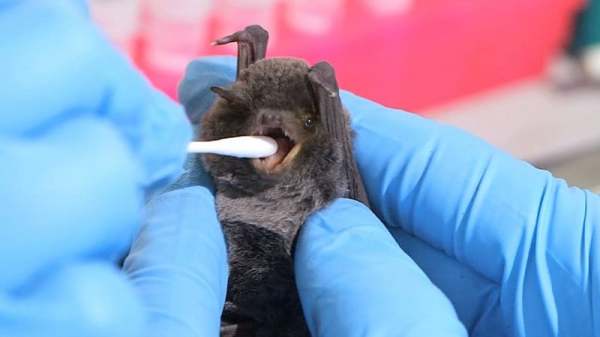
India’s response went beyond human treatment by launching an immediate "One Health" investigation. Central and state teams, alongside wildlife experts, descended on the North 24 Parganas area to investigate the source. They conducted surveillance of local fruit bat colonies to identify the spillover point.
The precision of this surveillance meant that broad COVID-style measures were unnecessary.
Professor Herfst noted that "SARS-CoV-2 and Nipah virus are very different in terms of pathogenesis, tissue tropism and -most importantly- modes of transmission, and are therefore not directly comparable. As long as there is no sustained human-to-human transmission, the public health risk remains low, and COVID-like control measures are not required."
Stringent measures in neighbouring countries
The international reaction provided a sharp contrast to India’s localised approach. Thailand introduced health declarations and Nepal set up health desks at border crossings. China implemented the most aggressive protocols including random swab tests for passengers.
However, Professor Herfst suggests these screenings may have been overkill: "Given the very limited human-to-human transmission of Nipah virus, routine screening of humans at airports does not seem necessary. While individual cases might be imported, widespread transmission is unlikely." He further noted that in regions like Europe, the worry is minimal because "Fruit bats, which are the natural reservoir of Nipah virus, are not present in Europe. As a result, the risk of Nipah virus infection in Europe is extremely low."
Information management and the WHO verdict
To combat the spread of speculative death tolls, the Ministry of Health issued frequent, transparent updates. They strictly advised the public to ignore incorrect figures, emphasising that only two cases were confirmed. When questioned about the lack of standard treatment protocols or vaccines, Professor Herfst remained cautious, stating, "I do not have direct experience with treatment protocols for Nipah virus infections, so I am unable to provide a detailed answer to this question."
Despite the lack of a "Plan B" vaccine, India’s transparency and the successful quarantine of nearly 200 people led the World Health Organisation(WHO) to assess the risk as "Low." The WHO eventually advised against the travel restrictions neighbouring countries had rushed to implement, validating the Indian model of targeted containment at the source.