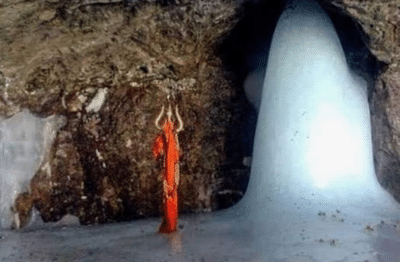
Amarnath Yatra Travel Guide: This year, the Amarnath Yatra begins on July 3 and continues until August 9. Thousands of devotees visit the holy cave every year during this 38-day journey.

How to Register for Amarnath Yatra 2026
Amarnath Yatra Registration Process Step By Step: The Amarnath Yatra, one of India's largest and most religious pilgrimages, will begin this year on July 3rd and continue until August 9th. Thousands of devotees visit the holy cave every year during this 38-day pilgrimage. The Shri Amarnath Shrine Board organizes this pilgrimage, and rules are strictly enforced. Let us tell you what you should keep in mind if you are planning the pilgrimage this time.
Understanding the registration process
If you're planning to embark on this pilgrimage, it's crucial to understand the registration process. This year, registration will begin on April 15, 2026, and can be done online and offline. Online registration can be done through the official website or mobile app, where verification via mobile number and email will be required. A mandatory health certificate and passport-size photo, made after April 8, 2026, must be uploaded.
Devotees who wish to register offline can apply at authorized bank branches. The process will be on a first-come, first-served basis. A health certificate and identification proof, such as an Aadhaar card, will be required at the time of application. Biometric verification will also be performed at the bank, and a fee of ₹150 per person will be charged.
It is also necessary.
Another important rule during the Yatra involves the RFID card. After registration, every pilgrim must obtain this card from designated centers in Jammu and Kashmir. Without this card, they will not be allowed to travel beyond entry points like Domail or Chandanwari. Therefore, it is extremely important to obtain it on time. Certain eligibility criteria have also been set for participation in the Yatra. Only those between the ages of 13 and 70 can apply. Pregnant women, especially those more than six weeks pregnant, are not permitted to travel. Additionally, all pilgrims must have a health certificate issued by an authorized doctor.
Choice of route to travel
There are two main routes for the pilgrimage: Pahalgam and Baltal. The Pahalgam route is traditional and longer, approximately 46 kilometers, while the Baltal route is shorter, approximately 14 kilometers, but slightly more difficult. Helicopter services are also available for those who find walking difficult. Special precautions regarding safety and weather are essential during the journey. Tents, accommodation, and other facilities are available along the route, but preparation and proper clothing are essential given the high altitude and cold weather .