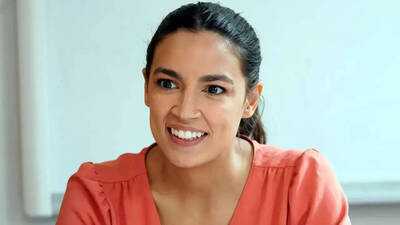
Congresswoman Alexandria Ocasio-Cortez has expressed disinterest in pursuing a presidential campaign, emphasizing her desire for broader societal change rather than seeking a specific political position. During a discussion with former Obama advisor David Axelrod at the University of Chicago's Institute of Politics, she addressed speculation regarding a potential 2028 presidential run. Ocasio-Cortez stated, "People often think my ambition is about holding a title, but it’s much larger than that. My goal is to transform this nation."
Rather than sidestepping the question about her presidential ambitions, Ocasio-Cortez reframed the conversation, arguing that the pursuit of a title was never her primary focus. "Presidents and elected officials come and go, but issues like single-payer healthcare endure," she remarked, receiving applause from the audience. She highlighted the importance of workers' rights and women's rights, asserting their permanence in contrast to transient political roles. Ocasio-Cortez also noted the liberation that comes from not being fixated on political advancement, stating, "When you’re not tied to a specific ambition from a young age, it allows you to wake up and ask, 'How can I address the current moment?'"
Although she downplays her presidential aspirations, Ocasio-Cortez has been a topic of discussion regarding a potential candidacy. Last year, she joined Senator Bernie Sanders on their "Fighting Oligarchy" tour, keeping her name relevant in national discourse. Presently, she ranks fourth among Democratic contenders for the 2028 election in the latest RealClearPolitics polling, trailing behind former Vice President Kamala Harris, California Governor Gavin Newsom, and former Transportation Secretary Pete Buttigieg.
Ocasio-Cortez's political journey has not been without its challenges. Some analyses have categorized her as one of the less effective members of the House in advancing legislation, even during times when Democrats held the majority. Earlier this year, she attended the Munich Security Conference in Germany, aiming to enhance her foreign policy credentials. However, her performance faced scrutiny when she struggled to respond to questions about U.S. actions if China were to invade Taiwan and mistakenly identified Venezuela's geographical location, leading to online mockery. In response to the backlash, she defended herself on Instagram, suggesting that the real issue lies not in her understanding but in the expectations set by a president who often speaks without consideration for the consequences of his words.