Football365
·15 July 2026
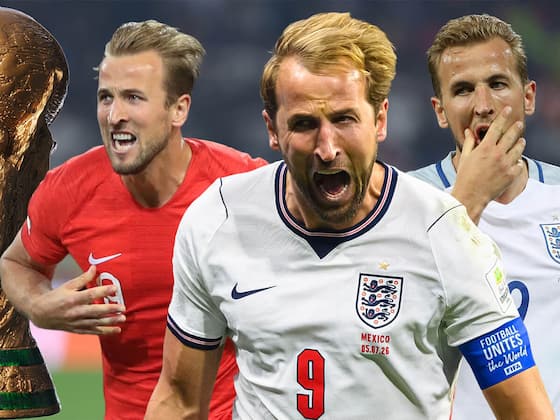
With questions swirling around Harry Kane’s performances in crucial moments for England, we revisited our archives to assess how he has fared when the pressure reaches its peak.
Before the World Cup semi-final clash against Argentina, one fan even suggested that Kane should be dropped – a rather absurd notion, to say the least.
That idea, of course, doesn’t hold water. Kane is undoubtedly England’s greatest ever goalscorer, a symbol of consistency and excellence, and far from being a burden like Cristiano Ronaldo has sometimes been perceived. Nevertheless, there is some legitimacy to the debate about his effectiveness in knockout-stage football.
We’ve reviewed our previous England player ratings following knockout matches at both the World Cup and the European Championships to rank Kane’s performances for the Three Lions from his poorest to his finest.
Unfortunately, we begin with one of his most underwhelming displays…
After joining Bayern Munich last summer and leading the pre-tournament favourites at Euro 2024, Kane ended the campaign without any silverware, still lacking a major trophy at the age of 30 despite a stellar career.
Manager Gareth Southgate made the bold but correct decision to substitute his captain just after the hour mark, following an unusually ineffective outing – one many had predicted.
Having struggled to make an impact, Kane picked up a yellow card for a follow-through challenge on Fabian Ruiz. The Bayern striker’s touch repeatedly let him down, leaving him unable to provide an outlet for Jordan Pickford or the defenders when they opted to go long.
As England supporters began chanting Ollie Watkins’ name, Southgate responded promptly by bringing on the Aston Villa striker to exploit the space behind Spain’s defence.
“What the f*** was that?” was my partner’s blunt reaction when Kane sent a promising free-kick soaring wide in the second half. Despite being used to disappointment, even she couldn’t hold back after witnessing the Tottenham forward squander yet another opportunity. Having just secured the Premier League Golden Boot, the 22-year-old was expected to lead England deep into the tournament. While tactical systems can offer explanations, there’s no escaping the fact that his performances have fallen short.
It’s a real pity. His first-half miss lacked conviction and precision. Though he was decent in aerial duels and drew some helpful fouls, he was largely anonymous. As he did against Colombia, Kane dropped deeper and deeper – a clear tactical instruction – but at barely 60% of his best, it failed to pay dividends. If England had a genuine alternative, he might have been withdrawn well before extra time.
He showed flashes of quality during a ten-minute spell early in one match, testing Bart Verbruggen from distance, linking play neatly, and winning a somewhat dubious penalty after contact from Denzel Dumfries. Kane converted confidently, moving level atop the scoring charts, though his mobility suggested he was battling back issues.
Whether due to the tactical setup, his fitness, or both, it’s evident that England haven’t been getting the best out of their captain recently.
It took him until the 82nd minute to register a shot, having had fewer touches (26) than any other England starter. Fatigue eventually caught up with him, and he was substituted during extra time after colliding with Southgate on the sidelines. Thankfully, it didn’t appear to be a serious injury.
He arguably should have earned a first-half penalty, and though his efforts were denied by Hugo Lloris, Kane showed immense composure to dispatch England’s awarded spot-kick. His second penalty, however, was one to forget – a missed opportunity that left him devastated. Still, his courage and leadership were never in doubt.
In another outing, Kane was England’s most influential player in the first half-hour, dropping deep effectively to help create the opening goal. His control and link-up play were superb, but Italy’s defensive discipline in the Euro 2020 final nullified him and Raheem Sterling, leaving neither with a shot on target. His shootout penalty, though, was an improvement on his earlier effort against Denmark.
There were games where Kane appeared slow and off the pace until extra time, partly due to injuries sustained at Bayern Munich. He often drifted too deep, missing key chances from Phil Foden and Declan Rice setups, but England’s result ultimately made his struggles irrelevant.
In another instance, he endured a quiet game marred by a defensive lapse that led to a Norwegian goal. Although he found the net just before halftime, it was ruled offside. It wasn’t vintage Kane, but England’s victory rendered his off day inconsequential.
At times, he sacrificed his own scoring ambitions for the team, playing deeper to enable Jesse Lingard, Dele Alli, and Sterling to flourish. Though he managed just one shot, his selfless role was vital to the collective performance.
In another fixture, he was barely involved early on, registering only two touches in the first half-hour. Yet he came alive later, contributing to Sterling’s goal before heading home a crucial second to effectively seal the game. It was a reminder of why you can never rule Harry Kane out.
He also played a pivotal role against Denmark, responding to England’s first setback of the tournament with leadership and poise. He delivered key passes, including one to Bukayo Saka for the equaliser, and though his penalty was initially poor, he converted the rebound to send England through. That goal drew him level with Gary Lineker as England’s joint-top scorer in major tournaments.
His assist for Jude Bellingham’s opener in another knockout match showcased his playmaking brilliance. Critics who once dismissed his Golden Boot haul from 2018 group games were silenced as his recent tournament goals all came in knockout fixtures. Kane has clearly evolved into a more complete forward.
Now England’s all-time leading tournament scorer, Kane continues to exhibit the qualities of an elite playmaker as well. Simply put, few others could replicate his influence.
His brace against a weaker opponent demonstrated ruthless finishing and near perfection in movement. Even his missed volley led to a corner that resulted in Jordan Henderson’s first England goal. From being tactically substituted earlier in the tournament to being rested ahead of a semi-final, Kane’s progression has been immense.
He continued his scoring streak in another knockout tie with a penalty that proved crucial. His assist for Bellingham’s second goal further highlighted his unselfishness and footballing intelligence.
While he conceded a penalty in one game – a marginal but correct decision under modern VAR scrutiny – Kane remained England’s talisman throughout.
For long stretches, he appeared frustrated by a lack of service, but once Anthony Gordon finally provided a quality cross, Kane responded with two goals of contrasting brilliance – one a poacher’s strike, the other a world-class finish. The chants of “Ballon d’Or” from fans felt fully justified.
He was simply outstanding. Winning and converting his own penalty with trademark calmness, he also used his physical strength to draw fouls nine times before a minor injury slowed him down. Even then, his passing from deep was exceptional, nearly finding Jamie Vardy on two occasions.
Kane has rightly become the face of this England era. The weight of captaincy has only pushed him to greater heights, turning him into the ultimate embodiment of responsibility and excellence for his country.