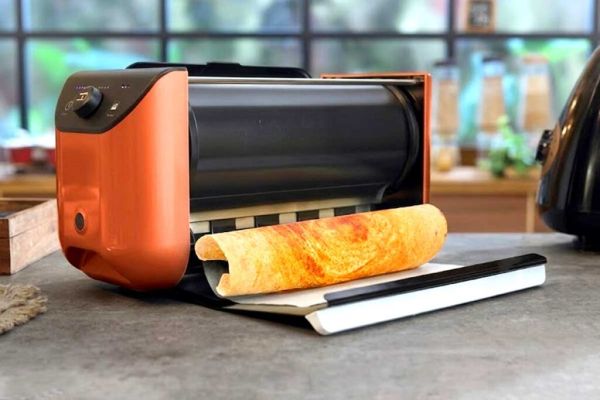
When you wake up in the morning you want to eat steaming hot dosa. But if you want, there is no way! The trick is to cook the right consistency of rice-dal batter. It is not at all easy to cook paper thin and fluffy dosa. Cooking the perfect dosa is as much of a challenge for home cooks as it is for restaurant cooks! However, technology does not sit idly by. And that’s why it’s a left-handed game to handle such a challenge. An amazing machine has arrived in the market, which will make perfect dosa in no time. Its name is ‘Dosa Printer’.
How does this technology work?
When you hear the name of the device, you may think of paper and ink printers. However, this technology is not chemical 3D printing. Easily fixed on Henschel’s countertop, this device is fully mechanical. It consists of a fixed container for holding the batter and a system of rollers like a rotating plate. The user just needs to pour the balanced batter of rice and beuli dal into the specified container. The rest is the responsibility of the device. As the roller heats up, the measured mixture is automatically spread under it. And within a few seconds, very thin, very thin dosa comes out.
What rules do you follow?
In order to properly use this new kitchen companion, it is important to follow some rules. All games are hidden in the batter’s density. If the batter is too thick, it will not come out properly through the tube of the machine. Again, if the mixture is too thin, the dosa may become crumbly and crumbly. That’s why every manufacturer packs the right size and density guide canisters with the machine.
What is the price of this device?
A taste of such modern technology will not strain the pocket much. Usually the price of this automatic dosa printer starts from 10 thousand rupees. This machine is undoubtedly the new wonder of modern Henschel in serving hot dosa in minutes without any effort.