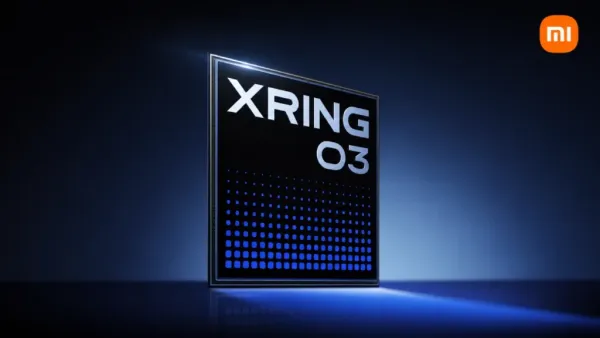
Xiaomi XRING O3, its latest flagship smartphone processor, was officially introduced, marking the company’s next major step in developing its own high-performance silicon.
The new chipset focuses on more than raw CPU performance, with Xiaomi placing equal emphasis on graphics performance, memory bandwidth, and on-device artificial intelligence. The biggest headline from the announcement is the chip’s AnTuTu performance.
Under Xiaomi’s laboratory testing conditions, the XRING O3 recorded 5,228,014 points in AnTuTu V11, making it the first flagship mobile processor to cross the five-million-point mark. The result marks a significant milestone for Xiaomi as it continues to expand its in-house chip platform.
One of the biggest architectural changes in the XRING O3 is its 10-core all-big-core CPU design. The processor combines six ultra-large cores with four large cores, rather than relying on smaller, efficiency-oriented CPU cores. Xiaomi claims this configuration delivers a 60% improvement in CPU performance compared with the previous generation.
The design aims to handle demanding workloads more aggressively, particularly tasks that can use multiple CPU cores simultaneously.
The XRING O3 is manufactured using a 3 nm process and contains 24 billion transistors within a die measuring approximately 133mm². Xiaomi says the increased transistor density provides additional room for its expanded CPU, GPU, and AI architecture.
Graphics performance is another major focus of the Xiaomi XRING O3.
Graphics performance receives an equally significant upgrade with the introduction of the G2-Ultra NX GPU. The XRING O3 uses a 16-core GPU, with Xiaomi claiming an 85% increase in graphics performance over the previous generation.
More importantly, the company says the new GPU can achieve that higher performance while consuming 64% less power. The GPU also supports third-generation ray tracing, and dedicated neural-network acceleration is integrated into the graphics architecture.
This combination is designed to improve demanding graphics workloads while also enabling AI-assisted processing to run more efficiently. The claimed improvement in both performance and power efficiency could be particularly important for smartphones, where sustained graphics workloads are often limited by heat and battery consumption.
AI processing is another major focus of the new chipset’s XRING O3 architecture.
Xiaomi has redesigned the XRING O3’s NPU architecture to provide dedicated acceleration for on-device AI workloads. The NPU reaches up to 200 TOPS of tensor computing power and 3.13 TFLOPS of vector computing power.
Xiaomi also claims up to a 45% improvement in on-device AI performance. Rather than concentrating AI acceleration in a single component, the XRING O3 distributes AI capabilities across different parts of the platform. Its imaging system includes AI-based noise-reduction processing, while other processing units also incorporate dedicated AI acceleration.
This approach lets the chipset handle AI tasks closer to the device, reducing reliance on cloud-based processing for supported workloads.
The XRING O3 also brings a major memory upgrade. Xiaomi has announced LPDDR6 support for the chipset, with memory bandwidth reaching up to 113.8GB/s. The higher bandwidth is particularly relevant to AI applications and graphics workloads, where large volumes of data need to move quickly between memory and the processor.
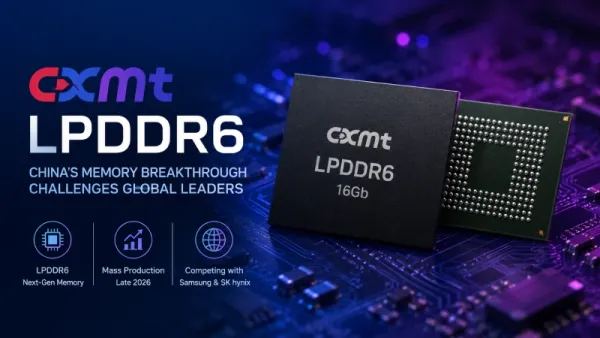
Xiaomi claims the memory bandwidth represents a 48% improvement over the XRING O1. Combined with the new CPU, GPU, and NPU architecture, the faster memory system gives the XRING O3 a broader performance upgrade rather than focusing on a single component.
The 5.2-million-plus AnTuTu score is the clearest indicator of the XRING O3’s claimed performance, but its broader architecture could matter more in everyday use. The combination of the upgraded CPU, GPU, faster memory, and AI hardware is designed to improve demanding workloads across gaming, imaging, and on-device AI. How these improvements translate into sustained performance, thermal control, and battery efficiency will ultimately determine the chip’s real-world impact.
According to recent news tipped by Anvin on X, the newest chipset is expected to run on the Xiaomi 18 Fold and the Xiaomi Pad 9 Pro Max, which are tipped to be the first devices to run it.
With the XRING O3, Xiaomi is pushing its in-house silicon into a significantly higher performance class. The 5,228,014 AnTuTu score, 10-core all-big-core CPU, and new G2-Ultra NX GPU provide the headline performance gains, while LPDDR6 support and the redesigned AI architecture expand the chip’s capabilities beyond conventional smartphone processing.
If Xiaomi can translate these laboratory figures into consistent real-world performance and efficiency, the XRING O3 could mark an important stage in the company’s development of its own flagship mobile silicon.