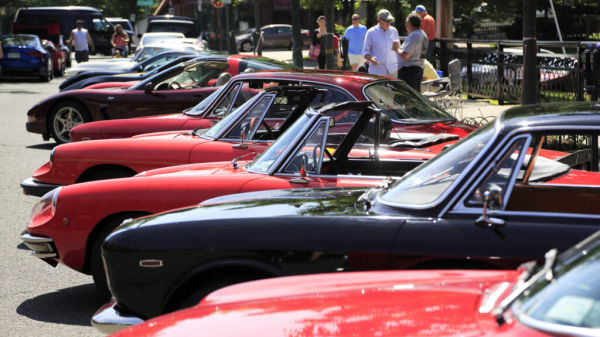
The appeal of a classic car doesn’t follow the same logic as the appeal of a new one. When automakers price a new car, the number is calculated carefully to stay within reach of the target buyer while still leaving a margin. A classic car isn’t priced that way. It isn’t as usable as something fresh off the line, either, and for plenty of buyers, spending money on one makes no sense at all.
Yet some classics carry prices that are simply staggering. A 1963 Ferrari 250 GTO — like the one in Ralph Lauren’s car collection — sold for upwards of $70 million. Measured against the logic that makes a new car’s price tag reasonable, none of it holds up. Value in the classic car world isn’t decided at the factory gate.
It’s decided decades later, once collectors work out which cars actually mattered. A model that seemed unremarkable at launch can sit in driveways and used car lots for twenty or thirty years before anyone notices. By then, most of the cheap examples have been driven hard or scrapped, and the survivors become the kind of car that sells for $70 million.
Perception decides which classics turn into icons and which get forgotten. That gap — what a car costs when it’s new and ordinary, and what it costs once collectors decide it isn’t ordinary — is the thread running through the cars below. Here are five classic cars that were overlooked on arrival and are highly sought after now.
Ferrari 250 GTO
These days, we view the 250 GTO as the holy grail of classic cars, the one that tops the world’s best car collections, maybe even the most lusted-after classic race car to ever exist. However, the 250 GTO had a very rough start, and for much of its life, it wasn’t nearly as sought after as it is now. The early prototype was considered so unattractive that its chief engineer Giotto Bizzarrini nicknamed it Il Mostro, Italian for the Monster.
The car’s price when new was $18,500 – big money in the 1960s, but nowhere near what it would eventually fetch. Fabrizio Violati, an Italian who raced historic cars and collected Ferraris, saved a 250 GTO from being scrapped in the 60s, and that car would go on to sell at auction in 2014 for $38 million.
A 250 GTO is also one of the many famous cars in Nick Mason’s collection. The Pink Floyd drummer paid about $64,000 for his in 1977 — which Robb Report calls “a high price for a 250 GTO” at the time, though it’s a rounding error next to the car’s value today. Granted, there were cars more overlooked than the 250 GTO when they came out, but few fit this list better than a car that once sold for $4,000 to keep it from being stripped for parts, only to fetch $38 million decades later.
Toyota 2000GT
The Ferrari 250 GTO is not the only 1960s unicorn that went unnoticed when it first came out. The Toyota 2000GT arrived in 1967 as an attempt to prove Japan could build more than economy cars. On paper it delivered — a 2.0-liter inline-six tuned by Yamaha put out 150 horsepower, and the whole car weighed only 2,400 pounds. It even landed a role in the 1967 James Bond film “You Only Live Twice.”
Be that as it may, none of it helped it sell. Toyota asked over $7,000 for the car, more than a Jaguar E-Type and well above a contemporary Corvette, at a time when American buyers had no reason to pay a premium for an unproven (in this segment, anyway) Japanese brand. By the time the model was discontinued in 1970, Toyota had built only 351 units in total. Hagerty even went out to say the car was a total sales flop when it came out. This verdict now looks absurd given the 2000GT these days is worth over 160 times its original cost.
In other words, the market caught up big time. A 1967 2000GT sold for $2,535,000 at a Gooding & Company auction in 2022, making it the most expensive Japanese car ever sold at auction — more than 300 times what Toyota couldn’t get buyers to pay for it. Even so, the 2000GT’s future value remains a mystery, especially since it failed to sell at the BH Auction at Tokyo’s City Circuit Tokyo Bay where it was valued between roughly $875,000 to $1 million.
BMW M1
In the mid-1970s, BMW set out to build a mid-engine supercar that could challenge Porsche on the racetrack, enlisting Lamborghini to help build it. Lamborghini’s mounting financial troubles derailed the plan, forcing BMW to take over production itself through a patchwork of Italian subcontractors — a process that dragged on long enough to push the M1’s launch back to 1978.
BMW’s 3.5-liter straight-six produced 277 horsepower in road trim. At a curb weight of about 3,200 pounds, the car needed roughly 5.6 seconds to reach 62 mph, with a top speed just above 160 mph. In race trim, the same engine could be tuned up to nearly 470 horsepower, enough to rank among the highest horsepower sports cars of the 1970s, with some examples pushing 200 mph.
None of that helped it sell on the street. BMW asked around $85,000 for the car, and between 1978 and 1981, around 450 cars were made in total, split between 399 street versions and about 50 for competition. Demand was thin enough that one car sat untouched in an Italian garage from 1982 onward, never even registered for road use.
Decades later, the M1 has become one of the most expensive BMWs ever built. Classic.com puts the average sale price at $755,636, backed up by recent results like $604,500 and $770,000, both from January 2026. At the very top, an unraced Procar racing variant sold for $1.76 million in 2025. A car BMW couldn’t sell at $85,000 now regularly clears six figures, and sometimes seven, at auction.
Jaguar XJ220
When Jaguar wheeled the XJ220 concept onto its stand at the 1988 British Motor Show, the promise of a V12 engine, all-wheel drive, and scissor doors triggered an immediate rush of interest. Roughly 1,500 hopeful buyers handed over deposits of about $80,000 each before Jaguar had committed to building a single production car.
What arrived in 1992 was a prime example of a sports car that didn’t live up to expectations. The V12 was swapped for a turbo V6 which drove only the rear wheels, the scissor doors disappeared, and escalator clauses buried in the original contracts pushed the final sticker toward $780,000 – well beyond the roughly $460,000 Jaguar had approved back in 1989.
Jaguar ultimately built just 281 cars against a planned run of up to 350, and dealers were still moving brand-new, unregistered stock as late as 1997, when the last one sold for roughly $200,000 – under half of what early buyers had committed to pay. None of that changed what the car actually was: topping out at 217 mph in a 1992 test, it briefly held the title of fastest production car in the world, before the McLaren F1 took it over in 1993.
That performance is finally being recognized. Classic.com puts the average sale price at $580,328, and a 1994 example matched the model’s auction record of $687,000 in 2023. A car Jaguar once discounted just to clear the lot is now firmly in six-figure territory, with the best examples pushing toward seven.
DeLorean DMC-12
John DeLorean’s original plan was to build a sports car for $12,000, the number behind the “DMC-12” name. By the time production started in 1981, the sticker price had climbed to $25,000, and buyers found a car that didn’t match it. The PRV V6 engine — a joint Peugeot-Renault-Volvo design — that topped out at 130 horsepower, and a car assembled by a workforce still learning the line, which showed in early panel gaps and electrical gremlins.
Even the friendlier reviews landed as backhanded compliments. Road & Track tested the car and called it “not quick for a sports/GT car in this price category,” despite praising its gullwing doors and stainless steel panels elsewhere in the same review. Sales never caught up to the hype. DeLorean Motor Company had run through close to $100 million by the time it collapsed at the end of 1982, roughly 9,000 DeLoreans were made in total.
None of that stopped the car from becoming a cultural icon once “Back to the Future” put it on screen a few years later. Today, Classic.com puts the average DMC-12 sale price at around $61,000, and the absolute top recorded sale reached $541,000 in 2011. A car nobody could sell fast enough in 1982 is now one of the most recognizable — and increasingly valuable — cars of its decade.