Mumbai: Inside a century-old building overlooking the bustling streets of south Mumbai, a quiet effort is underway to save rare Persian and Urdu translations of Indian scriptures — the last remnants of the country’s multi-cultural and inclusive past.
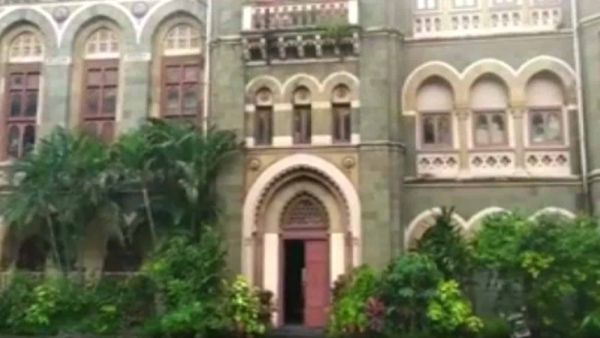
The Karimi Library, housed within the 152-year-old Anjuman-I-Islam institute, has embarked on a restoration drive to rescue more than 32 sacred Hindu texts, including Mahabharat, Ramayan, Bhagavad Gita, and Shiv Puran, printed between 1867 and 1896.
The structure, which stands near the iconic Chhatrapati Shivaji Maharaj Terminus, is home to books, newspapers, manuscripts in Sanskrit, English, Urdu, Persian, Marathi, Pashto, Arabic, books on history, philosophy, theology, literature, geography and varied subjects, some of which were printed more than 150 years ago.

Padma Shri Dr Zahir Kazi, president of Anjuman-I-Islam founded by Badruddin Tyabji in 1874, said that the library was established in 1898 after merchant Kazi Abdul Karimi Porbandari donated 4,500 valuable texts, and it was named after him.
Besides religious scriptures and royal decrees from Mughal Emperor Aurangzeb, the archive features rare newspapers dating back to 1875, including the Jaipur Gazette, Ambala Gazette, and Cairo’s Al Kaira, offering glimpses into India’s early freedom movement.
“The books have become old and pages brittle. They need to be treated with special chemicals to weed out fungus and pests. Books that are not in good shape are pasted with special paper for preservation,” Kazi said.
A team of experts has been roped in for the ongoing digitisation process, and pages are being uploaded to Anjuman-I-Islam’s cloud account, he explained.
“These books reflect so much of tolerance. It is an eye-opener for Indians that the country’s heritage is very much there in this library,” he said.
Library in-charge Mohammad Ghalib Mulla confirmed more than 100,000 book pages, alongside 70,000 pages from newspapers and periodicals, have been digitised, leaving just 2,250 pages to complete the archiving project.
“The newspapers give details about the initial days of the freedom struggle, the social and political situation of those times, how journalism was — pro and anti-British,” Mulla said.
The source of newspapers is mostly unknown. The newspapers and periodicals must be from Anjuman-I-Islam, as the institute has been a learning hub since its commencement and it would have subscribed to those publications, Mulla said.
The Karimi library, part of the Anjuman-I-Islam’s heritage edifice, is also undergoing renovation and efforts are underway to ensure it retains its old-world look and feel.
Kazi pointed out that several freedom fighters were part of the Anjuman-I-Islam’s management and the library was privy to several of their meetings.
“We intend to reopen the restored library by October 2, subject to the completion of work. We also plan to host many national and international events in this library,” he said.